

You know exactly what to do—jump, dash, wall-kick—but your character still clips the edge, misses the input window, or falls a pixel short. That split-second mistime turns progress into frustration. This guide is built to change that. Instead of telling you to “just practice,” we break down the mechanics, timing windows, and muscle memory patterns that power frame-perfect platforming. Drawing from thousands of hours spent conquering brutal hell-level challenges and refining competitive speedruns, we’ll give you a clear framework to analyze inputs, drill execution, and consistently land even the tightest maneuvers in any platformer.
Deconstructing the Jump Arc: The Foundation of Control
As you hone your skills in mastering frame-perfect platforming sections, you’ll find that the precision required for success can also enhance your effectiveness in maintaining map control, a crucial aspect we explore in our article on Map Control Tactics That Win Ranked Matches.
Every jump in a platformer can be broken into three phases: ascent, apex, and descent. The ascent begins the moment you press jump—this is your initial input and vertical commitment. The apex is the peak height, often featuring a brief “air-stall” where upward momentum pauses before gravity wins. The descent is gravity’s pull back to the ground (and yes, it’s less forgiving than it looks).
Mastering Apex Control
If there’s a secret to consistency, it’s this: the apex is your largest timing window. At the top of the arc, horizontal adjustments feel more precise because vertical speed is minimal. That’s your cue to line up attacks, air-dashes, or course corrections. In tight sequences—think frame-perfect platforming—micro-adjustments at the apex determine success or a restart screen.
Momentum also matters. Your starting speed affects jump distance and sometimes height. Sprint before takeoff to clear wider gaps; reduce speed for tight landings. Pro tip: test how far a full-speed jump carries you before attempting moving platforms.
Practical Drill: Pick one small platform. Jump to it repeatedly from short, medium, and max distances. Don’t rush. Observe arc shape, landing drift, and descent speed. Within minutes, your internal timing will sync with the game’s physics (and missed jumps will suddenly make sense).
The Holy Trinity of Precision: Buffering, Coyote Time, and Edge Control
High-level movement isn’t magic. It’s systems working together. If your jumps feel inconsistent or your character keeps “bonking” into walls, you’re probably missing one of these three mechanics.
Input Buffering Explained
Input buffering is the ability to queue your next action before your current animation finishes. In plain terms, you press jump slightly early, and the game stores that input until it’s allowed to execute.
For example:
- Dash toward a gap
- Press jump just before the dash animation ends
- Launch at the first possible frame for maximum distance
This is essential for frame-perfect platforming because it removes human reaction delay from the equation (your thumbs aren’t robots).
Leveraging Coyote Time
Coyote time is a hidden grace window that lets you jump a few frames after leaving a ledge. Think of Wile E. Coyote hovering midair before realizing gravity exists.
Practically, this means you can:
- Run off a platform intentionally
- Jump slightly late
- Still recover the leap
Some argue this makes games “too forgiving.” But in reality, it rewards deliberate timing rather than punishing micro-mistakes.
Mastering Ledge Grabs and Mantles
Ledge grabs depend on animation cues. Watch your character’s hand or shoulder shift forward—that subtle movement is your timing signal. Jump too early and you bonk. Too late and you slide past.
The Synergy
Buffer the jump, rely on coyote time as insurance, and time the mantle visually. Together, they create seamless movement that feels impossible to spectators.
Want deeper mechanical breakdowns? See endgame raid mechanics explained step by step for applied execution strategy.
Training Your Senses: Using Visual & Auditory Cues for Timing
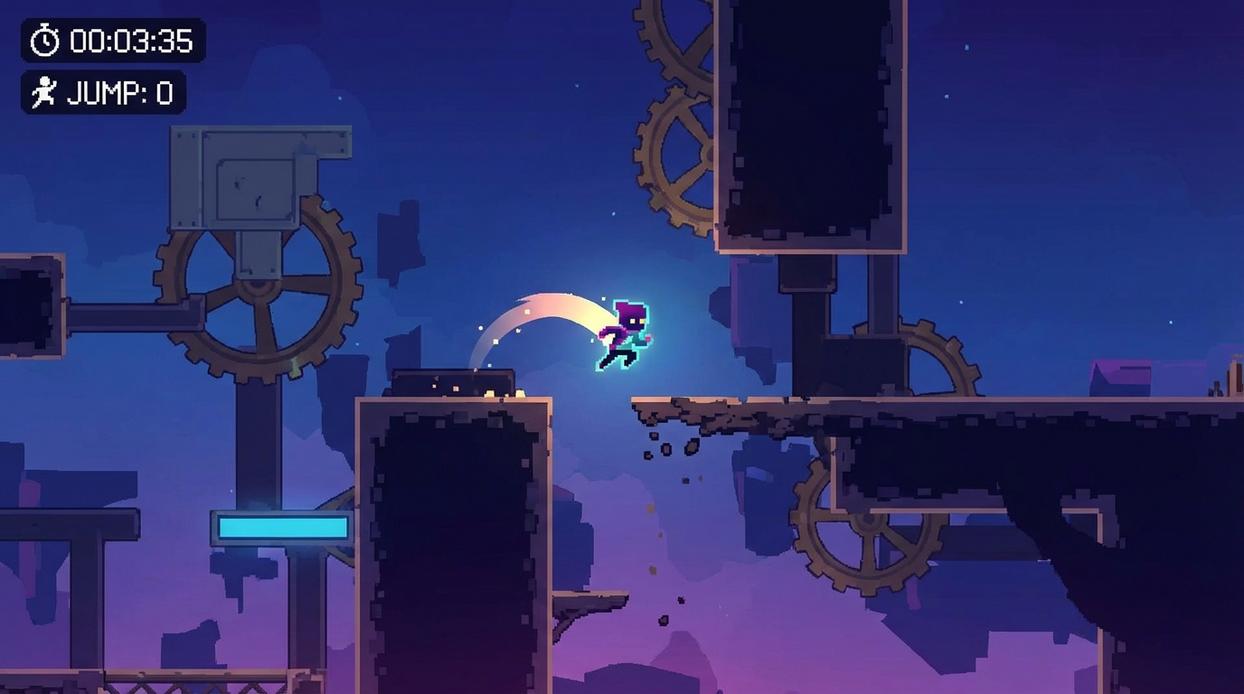
Most players rely on muscle memory—repeating inputs until their thumbs move automatically. That works… until it doesn’t. When speed shifts or pressure spikes, memorized button presses fall apart. True precision comes from reacting to cues, not reciting inputs. If you want consistency, train your eyes and ears.
Identifying Visual Cues
Start by picking one clear animation trigger:
- A character’s front foot planting before a jump
- A brief weapon flash before recoil
- A glowing particle effect on a hazard
These are telegraphs—visual signals that something is about to happen. In high-level or frame-perfect platforming, players jump when the heel hits the ledge, not when it “feels right.” That distinction matters.
The Power of Sound Design
Audio is even faster than sight. Listen for:
- The thump of landing before chaining a dash
- The whoosh signaling invincibility frames
- An enemy’s attack grunt before impact
Close your eyes during practice runs (briefly) to test reliance on sound alone. You’ll be surprised how accurate you become.
Active Practice Recommendation
Pick one cue only per session. For example, jump exclusively when you hear the final footstep at a platform’s edge. No guessing. No rhythm counting. React.
Master the cue, and timing stops being luck—it becomes recognition.
Chaining It All Together: Advanced Maneuver Execution
Wall jumps look simple—until you try chaining three in a row. Early on, I’d panic after the first leap and mash jump too soon. As a result, I’d lose momentum and slide straight down. The rhythm matters: push off, drift, then input the next jump at the apex of your arc. Too early and you stall; too late and you drop.
Next, dash-jump combinations taught me humility. Jumping before a dash grants extra height. During the dash? You extend horizontal distance. After? You salvage positioning. I used to treat them as interchangeable (they’re not), which cost me clears in tight corridors.
However, the biggest mistake was ignoring resource meters. Burning stamina on a flashy opener meant nothing left for the next move. Plan backward—ensure fuel for the final action.
Eventually, these corrections create flow state. Suddenly, even frame-perfect platforming feels like one continuous motion instead of frantic button presses.
Your Path to Platforming Consistency
You came here to turn inconsistent jumps into deliberate, repeatable execution—and now you have the mechanical awareness to do exactly that. By breaking down jump arcs, recognizing coyote time, and sharpening your response to visual and audio cues, you remove the guesswork that causes near-misses and input frustration. No more feeling like the controls are working against you.
This is how frame-perfect platforming begins: with control, not luck.
Now take action. Load your favorite platformer, pick one technique—like isolating audio cues—and drill it for a full session. Players who train with intention see faster improvement. Start today and turn precision into your new default.
